

By 2026, the BIM modelling landscape offers architects and structural engineers an overwhelming array of tools, workflows, and trends. Selecting the right solutions demands clear criteria: AI automation, cloud collaboration, digital twin integration, generative design, regulatory compliance, and scalability. This article equips you with a practical framework to evaluate BIM trends, compare leading software platforms, and make confident decisions that enhance project efficiency and team coordination across U.S. projects.
Table of Contents
- Selection Criteria For Evaluating BIM Modelling Trends
- AI-Enhanced BIM Automation: Transforming Design Workflows
- Cloud-Based BIM Collaboration Platforms: Real-Time Connectivity
- Digital Twins And Lifecycle BIM: Extending BIM Beyond Design
- BIM Software Comparison: Choosing The Right Tool In 2026
- Summary And Situational Recommendations
- Explore Professional BIM Modelling Solutions To Elevate Your Projects
Key takeaways
| Point | Details |
|---|---|
| 68% of U.S. AEC professionals adopted BIM by 2026, driving measurable ROI gains through improved coordination and efficiency | BIM adoption statistics |
| AI automation and cloud collaboration rank as top priorities, reducing manual tasks by up to 30% and enabling real-time teamwork | AI and cloud BIM benefits |
| Digital twins extend BIM value into lifecycle management, supporting predictive maintenance and structural health monitoring for infrastructure | Digital twin integration |
| Generative design optimises structural decisions, enhancing sustainability and performance outcomes for complex projects | Generative design impact |
| Leading software platforms vary significantly in AI capabilities, cloud features, parametric modelling, and pricing, affecting suitability for different firm sizes | BIM software comparison |
Selection criteria for evaluating BIM modelling trends
Before diving into specific trends, you need a robust framework to assess which BIM technologies align with your firm’s goals. The right criteria ensure you invest in tools that deliver measurable efficiency gains, foster collaboration, and meet regulatory requirements in 2026.
Selection criteria focus on AI capabilities, cloud collaboration, digital twin integration, generative design, regulatory compliance, and cost-effectiveness. These factors determine whether a BIM solution fits your project scale, team structure, and long-term strategic objectives.
Consider these essential evaluation criteria:
- AI and automation capabilities: Tools that automate clash detection, element classification, and quality control free your team from repetitive tasks. This improves design accuracy and speeds up validation workflows.
- Real-time cloud collaboration: Cloud platforms enable geographically dispersed teams to co-author models simultaneously, reducing coordination errors and accelerating project delivery.
- Digital twin integration: Linking BIM data with IoT sensors supports lifecycle asset management, predictive maintenance, and structural health monitoring beyond construction completion.
- Generative and parametric design: Advanced modelling techniques optimise structural decisions, enhance sustainability, and adapt designs efficiently when parameters change.
- U.S. BIM mandate compliance: Meeting federal and state BIM standards is mandatory for public projects. Non-compliance risks project delays, penalties, and contract disputes.
- Cost and scalability: Evaluate licensing models, subscription costs, and scalability to ensure the software fits your firm size and project portfolio without overextending budgets.
By applying these criteria systematically, you can confidently select BIM trends and tools that align with your specific project needs. This disciplined approach prevents costly missteps and ensures your technology investments deliver tangible returns. For firms seeking expert support, architectural and structural detail drafting services can complement your internal capabilities.
AI-enhanced BIM automation: transforming design workflows
AI-powered BIM tools represent the most significant efficiency leap for architects and structural engineers in 2026. By automating repetitive tasks, improving clash detection, and enhancing model validation, AI fundamentally transforms design workflows.
27% of firms adopt AI in BIM for task automation by 2026, with AI parametric modelling improving design efficiency by up to 30%. These gains translate directly into faster project delivery, reduced rework, and lower labour costs.
AI automation delivers concrete benefits:
- Intelligent clash detection: AI prioritises relevant conflicts, filtering out minor issues and highlighting critical clashes that require immediate resolution. This reduces the time engineers spend sifting through thousands of potential clashes.
- Automated element classification: Machine learning algorithms classify and tag model elements automatically, ensuring consistency and reducing manual data entry errors.
- Parametric modelling efficiency: AI-driven parametric tools update designs instantly when parameters change, allowing rapid exploration of design alternatives without manual rework.
- Quality control and validation: Automated validation checks ensure models meet standards before sharing, catching errors early and preventing costly downstream corrections.
- Reduced manual drafting: AI reduces routine drafting tasks by up to 30%, freeing your team to focus on innovation, design optimisation, and client collaboration.
Pro Tip: Integrate AI automation gradually. Start with clash detection and element classification before expanding to generative design, allowing your team to build confidence and adjust workflows incrementally.
By embracing AI-enhanced BIM automation, you position your firm to deliver higher-quality projects faster and more cost-effectively. For firms managing complex multidisciplinary coordination, multidisciplinary BIM cuts design changes significantly, amplifying AI’s efficiency gains.
Cloud-based BIM collaboration platforms: real-time connectivity
Cloud BIM platforms eliminate the coordination challenges that plague geographically dispersed teams. By providing a single source of truth accessible to all disciplines, cloud tools enable seamless collaboration and reduce errors caused by outdated file versions.

Over 50% of new projects use real-time cloud BIM collaboration by 2026, driven by the need for instant model co-authoring and improved communication across remote teams.
Cloud collaboration platforms deliver measurable advantages:
- Single source of truth: All team members access the same up-to-date model, eliminating confusion from multiple file versions and ensuring coordination accuracy.
- Instant model co-authoring: Architects, engineers, and contractors edit models simultaneously, accelerating design iterations and reducing turnaround times.
- Error reduction: Real-time updates prevent coordination errors caused by working from outdated files, cutting costly rework and delays.
- Improved communication: Cloud platforms track changes automatically, reducing requests for information (RFIs) and improving accountability across disciplines.
- Scalability: Cloud infrastructure scales effortlessly from small projects to large multidiscipline workflows, supporting firms of all sizes without infrastructure investment.
For U.S. firms managing distributed teams or partnering with remote consultants, cloud BIM collaboration is no longer optional. It’s essential for maintaining competitive project timelines and quality standards. BIM.Supply cloud collaboration solutions integrate seamlessly with leading platforms, providing turnkey support for teams transitioning to cloud workflows.
Digital twins and lifecycle BIM: extending BIM beyond design
Digital twins integrate BIM data with real-time IoT sensor inputs, transforming static models into dynamic tools for proactive maintenance, operational efficiency, and structural health monitoring. This extends BIM’s value far beyond construction completion.
Digital twins improve lifecycle outcomes, asset monitoring, and predictive maintenance, increasingly adopted in infrastructure projects by 2026. For large infrastructure projects where long-term performance and safety are critical, digital twins offer unparalleled insights.
Digital twin integration provides substantial benefits:
- Structural health monitoring: Real-time sensor data detects stress, vibration, and environmental impacts, alerting facility managers to potential issues before failures occur.
- Predictive maintenance: Analytics predict equipment failures and maintenance needs, cutting unplanned downtime and repair costs by scheduling interventions proactively.
- Lifecycle asset management: Digital twins track performance, energy consumption, and occupancy patterns throughout the asset’s life, optimising operations and extending service life.
- Critical infrastructure applications: Bridges, dams, airports, and hospitals benefit most from continuous monitoring, where safety and uptime are non-negotiable.
- Regulatory compliance: Growing U.S. government and industry mandates require digital twin integration for public infrastructure, making adoption essential for compliance.
Pro Tip: Start small with digital twin pilots on high-value assets. Demonstrate ROI through reduced maintenance costs and improved uptime before scaling to your entire portfolio.
By integrating digital twins into your BIM workflows, you unlock operational efficiencies and risk mitigation that traditional static models cannot provide. Digital twin integration with BIM services supports firms transitioning to lifecycle-focused practices.
BIM software comparison: choosing the right tool in 2026
Selecting the right BIM software depends on your firm’s priorities: AI automation, cloud collaboration, parametric modelling, infrastructure focus, or budget constraints. Understanding how leading platforms differ helps you make informed decisions.
Autodesk Revit leads in parametric modelling and AI automation; ArchiCAD excels in collaboration and usability; Bentley Systems dominates infrastructure with digital twin support. Each platform serves distinct needs and project types.
| Software | AI Automation | Cloud Collaboration | Parametric Modelling | Digital Twin Support | Pricing Model | Best For |
|---|---|---|---|---|---|---|
| Autodesk Revit | Advanced AI clash detection, automated element classification | BIM 360 cloud co-authoring | Industry-leading parametric control | Moderate | Subscription, scalable tiers | Firms prioritising AI automation and parametric design |
| ArchiCAD | Basic AI features | Strong real-time collaboration tools | Solid parametric capabilities | Limited | Subscription, mid-range pricing | Remote teams needing user-friendly collaboration |
| Bentley Systems | Moderate AI integration | Enterprise cloud platforms | Advanced parametric and generative design | Excellent digital twin integration | Enterprise licensing | Infrastructure projects requiring lifecycle management |
Key considerations when choosing software:
- AI automation priority: If reducing manual tasks and improving clash detection are critical, Autodesk Revit offers the most robust AI capabilities in 2026.
- Cloud collaboration needs: Distributed teams benefit most from ArchiCAD’s intuitive real-time collaboration or Autodesk BIM 360’s comprehensive cloud ecosystem.
- Infrastructure focus: Bentley Systems excels in complex infrastructure projects requiring digital twin integration and lifecycle asset management.
- Budget and scalability: Evaluate subscription costs against firm size and project volume. Smaller firms may prefer mid-tier solutions, while large enterprises justify premium licensing.
- Project complexity: Parametric modelling strength matters most for complex, adaptive designs. Revit and Bentley lead here, offering superior flexibility.
Matching software capabilities to your specific project needs and team structure ensures you maximise ROI and avoid costly platform migrations later. BIM.Supply software solutions provide implementation support and training for all major platforms.
Summary and situational recommendations
Synthesising the insights above, your BIM trend and software selections should align tightly with your firm’s project portfolio, team structure, and strategic goals in 2026.
Actionable recommendations:
- Prioritise AI automation: Firms seeking design efficiency and reduced rework should adopt Autodesk Revit or similar AI-enhanced platforms. The 30% efficiency gain justifies the investment for most practices.
- Choose Bentley for infrastructure: If your portfolio includes bridges, dams, or large public works requiring lifecycle management, Bentley Systems offers unmatched digital twin and asset monitoring capabilities.
- Cloud-first for distributed teams: Remote or geographically dispersed teams must select cloud-collaborative platforms like ArchiCAD or Autodesk BIM 360 to maintain coordination and reduce errors.
- Generative design for sustainability: Structural engineers tackling complex, sustainability-focused projects benefit significantly from generative design tools, optimising material use and performance.
- Comply with U.S. BIM mandates: Full compliance with federal and state BIM standards is non-negotiable for public projects. Verify your software supports required data exchange formats and reporting.
- Align costs with firm size: Evaluate licensing models and scalability carefully. Small firms should avoid over-investing in enterprise features they won’t use, while large firms need platforms that scale seamlessly.
By applying these situational recommendations, you can confidently navigate the 2026 BIM landscape, selecting tools and trends that deliver measurable project efficiency and collaboration improvements.
Explore professional BIM modelling solutions to elevate your projects
Implementing the latest BIM trends requires expertise, resources, and ongoing training. BIM.Supply delivers AI-enhanced, cloud-collaborative BIM services tailored to the evolving needs of U.S. architects and structural engineers in 2026.
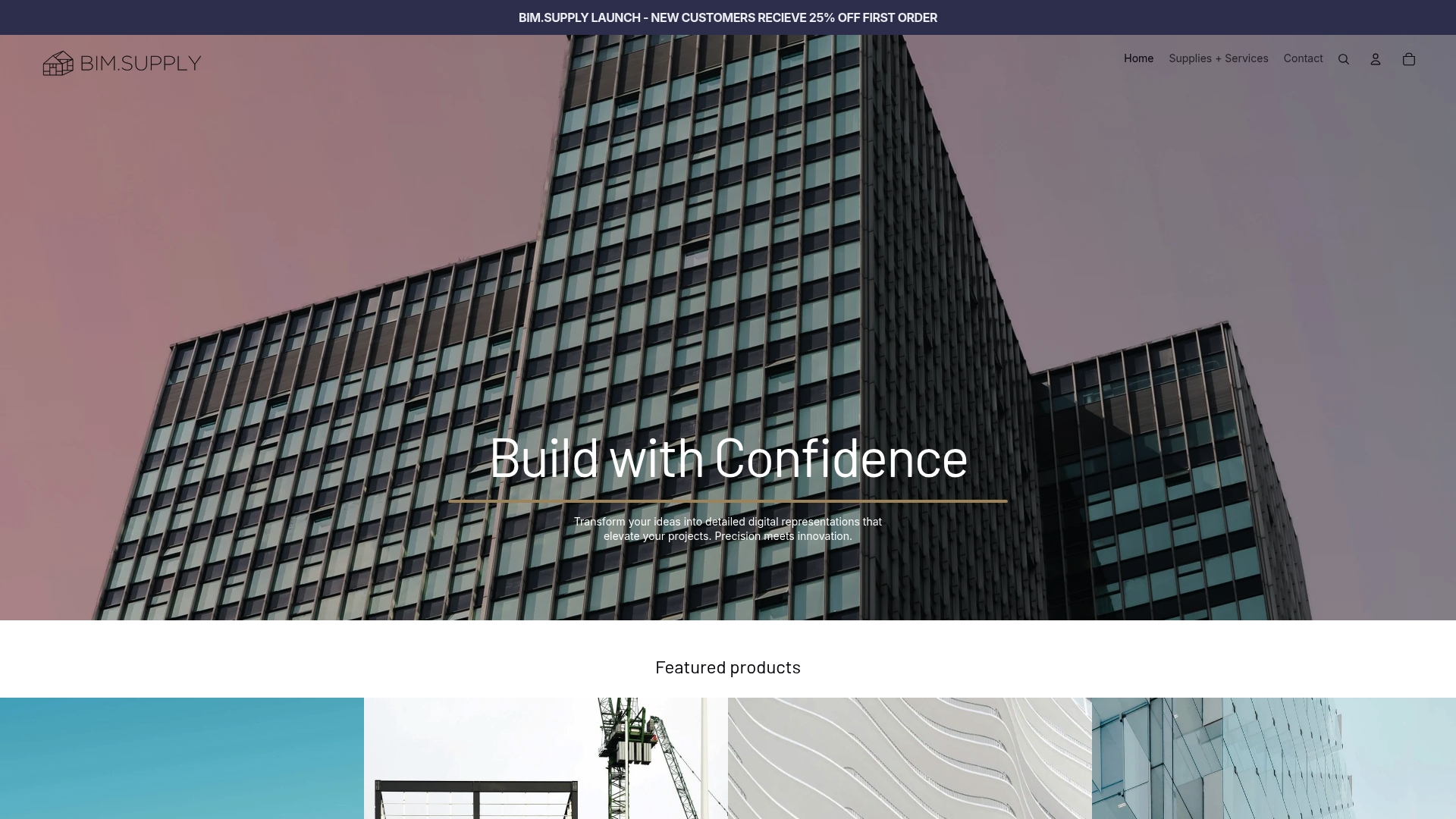
Our team provides comprehensive BIM modelling services incorporating generative design, parametric workflows, and digital twin integration. Whether you need architectural Revit modelling services or structural Revit BIM modelling, we ensure your projects meet U.S. BIM standards and leverage cutting-edge automation.
Partner with BIM.Supply to access scalable solutions that align with your project goals, budget, and timeline. Our unit-rate pricing model provides cost predictability, allowing you to focus on design innovation while we handle the modelling complexities.
Frequently asked questions
What are the biggest benefits of adopting AI in BIM workflows by 2026?
AI automation reduces manual drafting tasks by up to 30%, improves clash detection accuracy, and accelerates model validation. This frees your team to focus on design innovation and client collaboration, delivering projects faster with fewer errors.
How can cloud BIM collaboration improve multi-disciplinary project coordination?
Cloud platforms provide a single source of truth, enabling real-time model co-authoring across geographically dispersed teams. This eliminates coordination errors from outdated files, reduces RFIs, and accelerates project delivery by improving communication and accountability.
What types of projects benefit most from digital twin integration?
Large infrastructure projects like bridges, dams, airports, and hospitals benefit most. Digital twins enable structural health monitoring, predictive maintenance, and lifecycle asset management, cutting unplanned downtime and extending service life through proactive interventions.
How does generative design influence sustainability in BIM?
Generative design algorithms explore thousands of design alternatives based on sustainability criteria like material efficiency, energy performance, and structural optimisation. This allows engineers to select solutions that minimise environmental impact while meeting performance and cost targets.
What should small firms consider when selecting BIM software in 2026?
Small firms should prioritise cost-effective subscription models, user-friendly interfaces, and scalability. Avoid over-investing in enterprise features you won’t use immediately. Focus on cloud collaboration and basic AI automation to maximise ROI as your practice grows.
Recommended
- Multidisciplinary BIM Cuts Design Changes 50% in 2026 – BIM.Supply
- BIM Modelling from Concept to Completion (Price Per Sqft) – BIM.Supply
- BIM.Supply - BIM Modelling - Drafting - As-Builts
- Professional Architectural Revit Modeling Services (LOD 350) – BIM.Supply
- 6 Essential Hygienic Cladding Trends 2026 for Facility Managers